
You know it the moment the car door clicks shut. Or when you hang up the phone, and the silence in the room screams louder than any words before it. Your heart feels torn in two directions, and neither feels right. Having to let go of someone you still love is one of the most brutal inner battles.
There are breakups that feel like a clean cut. The love has grown cold, the path is clear. But what if your heart still burns? What if you're the one who has to leave, even though everything inside you screams, "Stay!"? Or what if you're left, and the "I still love you" gets stuck in your throat because it changes nothing? This pain is different. It's complicated, sticky, and deep.
It feels like a betrayal of your own feelings. How can you give up something you love so much? How can you let go of someone who is a part of your own story?
What I've Learnt Along the Way
Letting go doesn't mean invalidating the love. It doesn't mean pretending all those beautiful moments never happened. It's not a switch you flip to become heartless. Quite the opposite, in fact.
Letting go is the painful acknowledgement of reality. It's the admission that love alone sometimes isn't enough to hold two people together. It's accepting that you cannot save, change, or force another person into happiness when the shared foundation has crumbled. It's an act of self-respect when holding on slowly hollows you out from within.
This step often feels selfish. But sometimes, it's the only way not to completely drown. It's a decision for your own survival.
Love or the Fear of Nothingness?
I've learned to ask myself honest questions. What exactly is it that makes me hold on? Is it the person as they are today, with all the hurts and problems? Or is it the memory of a better time, a hope that has long since found no nourishment?
Often, it's not just love that binds us. It's habit, which offers such deceptive security. And it's the naked fear of loneliness. The fear of the empty chair at the table, of weekends with no plans, of the "I" where a "We" stood for so long. This fear is a powerful adversary. You can't push it away or ignore it; that only makes it stronger. You have to face it.
Write it down. Soberly. What does this relationship truly give you? And what does it take from you? The list of negative points is often overwhelming when you see it in black and white. And then, in a weak moment, you talk yourself into believing it wasn't so bad after all. That love can conquer anything. But love must not be a licence for destruction.
When Holding On Breaks You
You notice it when you start losing yourself. You tiptoe through your own thoughts so as not to provoke the other person. You weigh every word. Your joy depends on their mood, your energy drains away. You are but a shadow of your former self.
When words become weapons, when psychological pressure suffocates you, or when hands lose control, we are no longer talking about a difficult phase. Then it's no longer about romantic letting go, but about your survival. Your safety and your mental well-being are paramount. Forgiveness does not mean you are obliged to stay and continue to be hurt. Never.
The Lord is near to the brokenhearted and saves those who are crushed in spirit. Psalm 34:18 (NIV)
Sometimes, the most painful step is the only healthy one. It takes a certain pride – not arrogance, but the sincere conviction that as a child of God, you are valuable and deserve a life of peace.
The First, Hesitant Steps
No one expects you to let go overnight. It's a process. It might begin by creating a little distance. One less phone call. A conscious "no" to a meeting you know will only set you back. These are tiny steps towards a life of your own.
There will be days when grief overwhelms you. The pain, the loss, the longing. That's normal. That's part of the healing process. Allow yourself these feelings. Weep. Be angry. But do not make decisions in these moments. That's precisely when the danger is greatest of throwing everything away and running back to unhealthy familiarity.
Where is God in This Pain?
In the darkest hours of my life, I haven't experienced God as the great problem-solver who simply takes the pain away. I've experienced him as the silent companion. The one who is there when no one else is. The one who endures the tears, the anger, and the doubts.
Jesus himself knows this feeling of being torn. In the Garden of Gethsemane, he prayed and sweated with anguish. He knows what it feels like to have to walk a path you don't want to walk. He understands your pain not just theologically; he felt it.
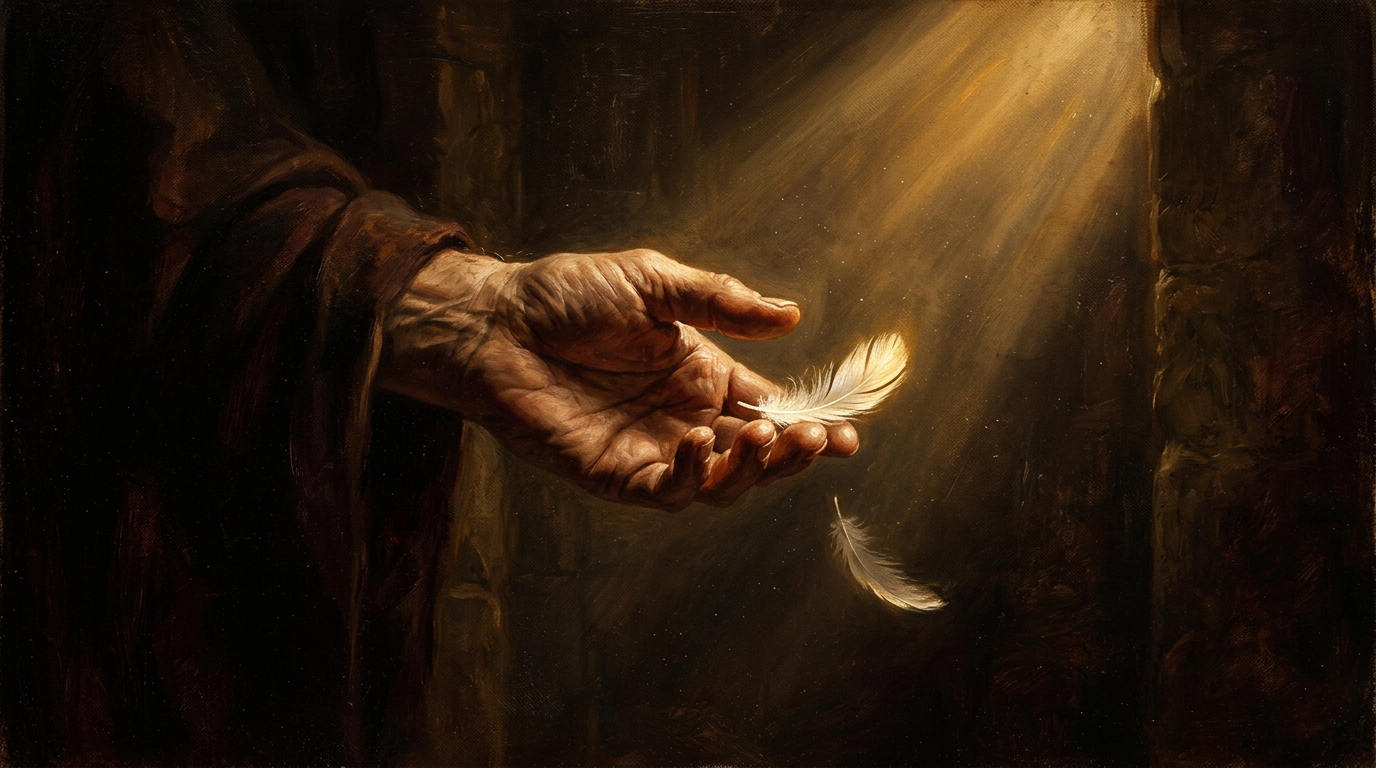
Letting go can be a profound act of faith. It means placing the person you love and your own future into God's hands. It's the admission: "I can't do this anymore. My strength is at its end. Please, take over." It's a leap into the unknown, but with the trust that God will catch you.
You can love someone and still let them go. The love may remain as a soft melody in your heart, as a scar that tells of a deep connection. But it doesn't have to shackle you any longer. You are allowed to move on. You are allowed to heal. You are allowed to breathe again.